

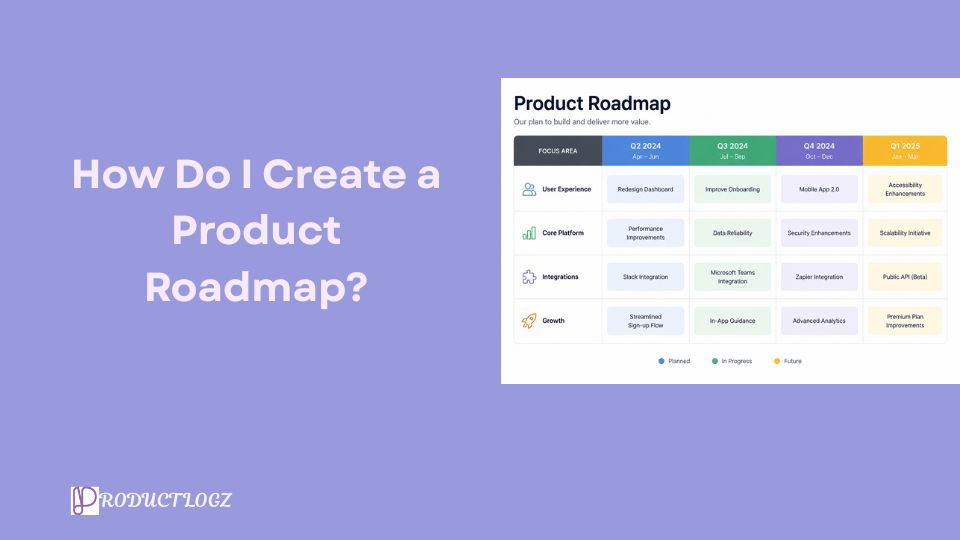
Have you ever sat in a sprint planning meeting where half the team has no idea why they're building what's on the list?. Reports show that nearly 31% of software projects are canceled before completion. For SaaS founders and product managers, knowing how to create a product roadmap is the difference between a team that ships with clarity and one that's always playing catch-up. This guide explains the process of creating roadmaps and best practices for long-term product alignment.
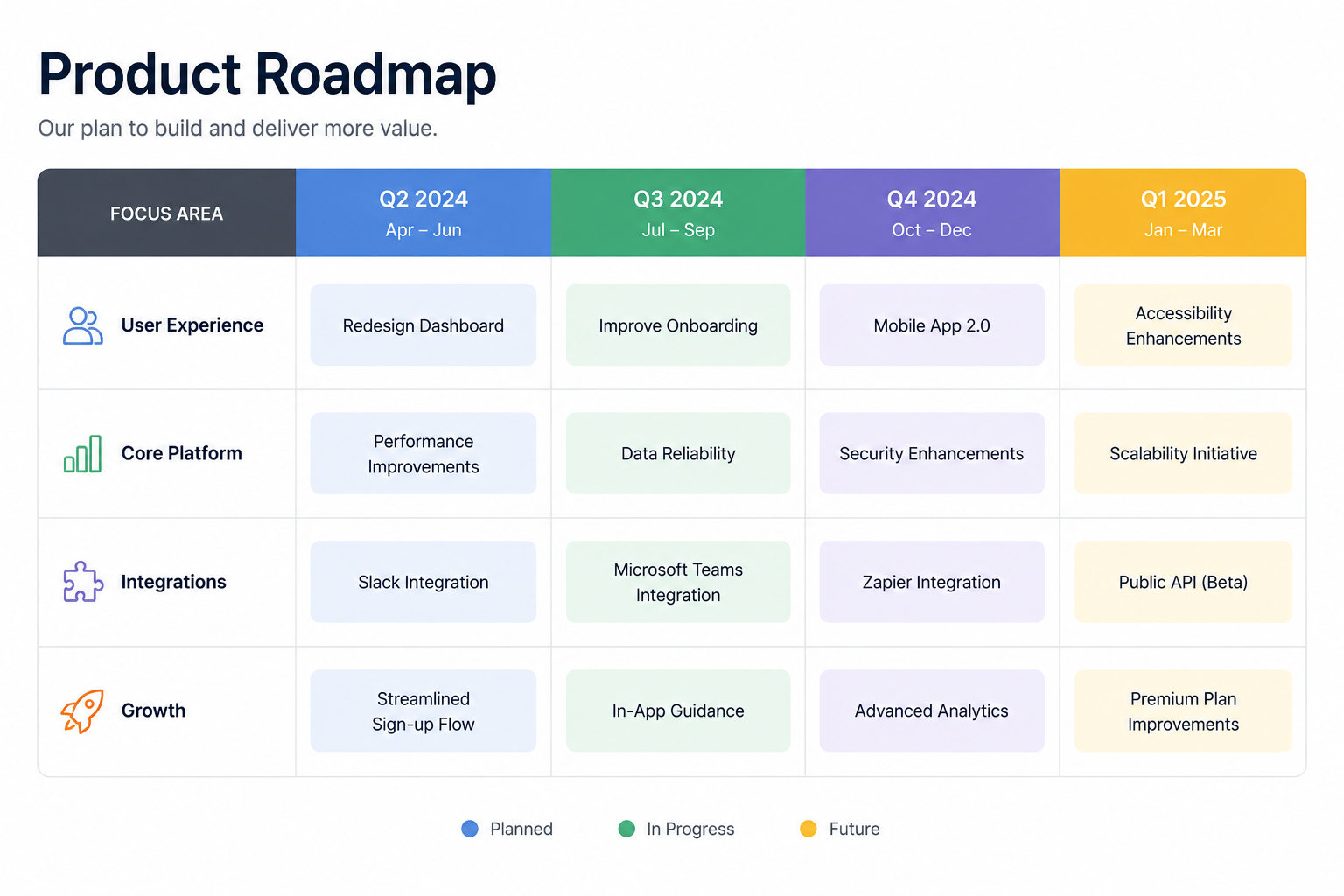
A product roadmap is a strategic visual plan that outlines the vision, direction, priorities, and progress of a product over time. It is not a backlog, sprint plan, or Gantt chart, although it supports all three.
An effective roadmap helps teams:
Unlike static presentation slides, product roadmaps are living documents. As customer needs, market trends, and business priorities change, the roadmap changes with them.
This flexibility is especially important for SaaS teams, where products are constantly evolving.
Product roadmaps are important because it helps teams stay aligned as products continue to evolve. Since every release is a starting point rather than a finish line, roadmaps are clear in an environment where priorities can constantly shift.
Below are the five essential steps involved in creating an effective product roadmap:
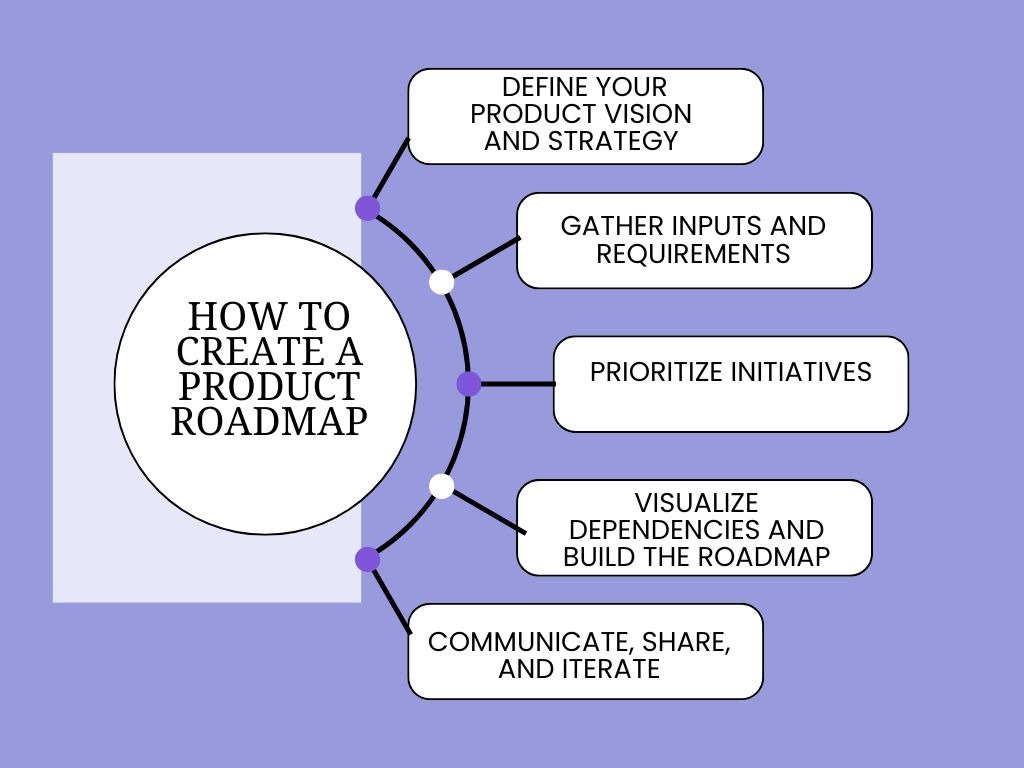
Before an initiative lands on your roadmap, you need to answer a foundational question: what is this product ultimately for?
Your product vision is a directional statement about the long-term outcome you are building toward. It is not a feature, nor is it a metric. It is the reason the product exists. More reasons an effective strategy covers:
A roadmap created from one person’s assumptions is often unreliable. However, a roadmap built using input from different teams across the organization is much more strategic and effective.
One of the best ways to gather this input is by holding a roadmap planning workshop. During this process, involve the engineering, design, sales, marketing, and customer success teams. Collect customer feedback from support tickets, surveys, and user interviews. You should also review market trends, study competitors, and outline the company’s goals for the next few quarters.
The purpose of this step is not to make everyone agree on everything. Instead, the goal is to understand different perspectives before making important prioritization decisions.
Prioritization is one of the hardest parts of building a roadmap, but it is also one of the most important.
After your workshop, you will likely have a long list of ideas, feature requests, and requirements. At this stage, the challenge is not deciding whether the ideas are valuable. Most of them probably are. The real challenge is deciding what should be built now and what should come later.
To make those decisions, you need to understand several factors. First, identify dependencies, which are tasks that must be completed before other work can begin. Then, consider capacity constraints and what your team can realistically deliver within a specific timeframe. Also, you need to evaluate strategic impact and determine which initiatives best support your product vision and business goals.
This is where a product prioritization framework becomes useful. Methods like RICE, MoSCoW, and weighted scoring models help teams evaluate initiatives more objectively. Instead of relying on opinions or politics, these frameworks help you measure value against effort.
Once prioritization is complete, your roadmap stops being a simple wish list and becomes a structured plan
The format you choose matters a lot. A roadmap filled with large blocks of text does not create alignment. Instead, it creates confusion. However, a roadmap that is visually clear and organized around themes, timelines, and milestones makes the strategy easier to understand at a glance.
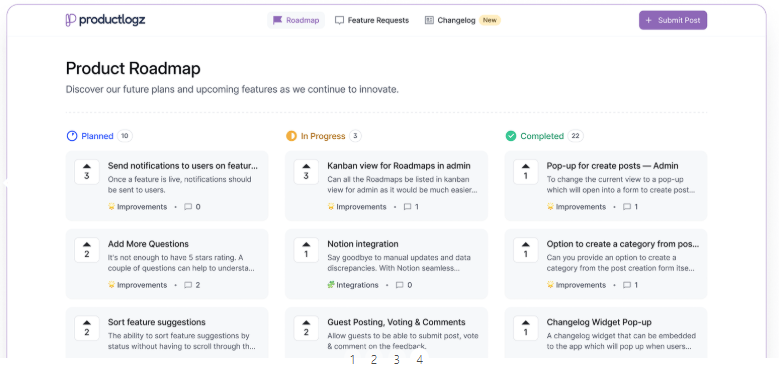
Most product roadmaps are organized by month, quarter, or using the now-next-later format. The now-next-later roadmap is popular with agile product teams because it avoids strict delivery dates while still showing clear priorities and sequencing.
In this format:
The final step in building a product roadmap is making it accessible and trusted.
That's why you should share the roadmap with all stakeholders involved in the product lifecycle. Use it as the basis for regular product calls, sprint planning sessions, and executive updates. A single underlying roadmap can support all of these views without requiring you to maintain multiple disconnected documents.
Agile product roadmaps are designed to adapt quickly as customer feedback and business priorities change. Unlike traditional long-term plans, agile roadmaps focus more on outcomes than rigid feature commitments.
Key characteristics of agile product roadmaps include:
Agile roadmaps help teams stay responsive without losing strategic direction. However, flexibility alone is not enough. Teams also need strong roadmap practices to maintain alignment over time.
Even well-designed product roadmaps can fail if teams do not manage them properly. Here are some best practices you should keep in mind:
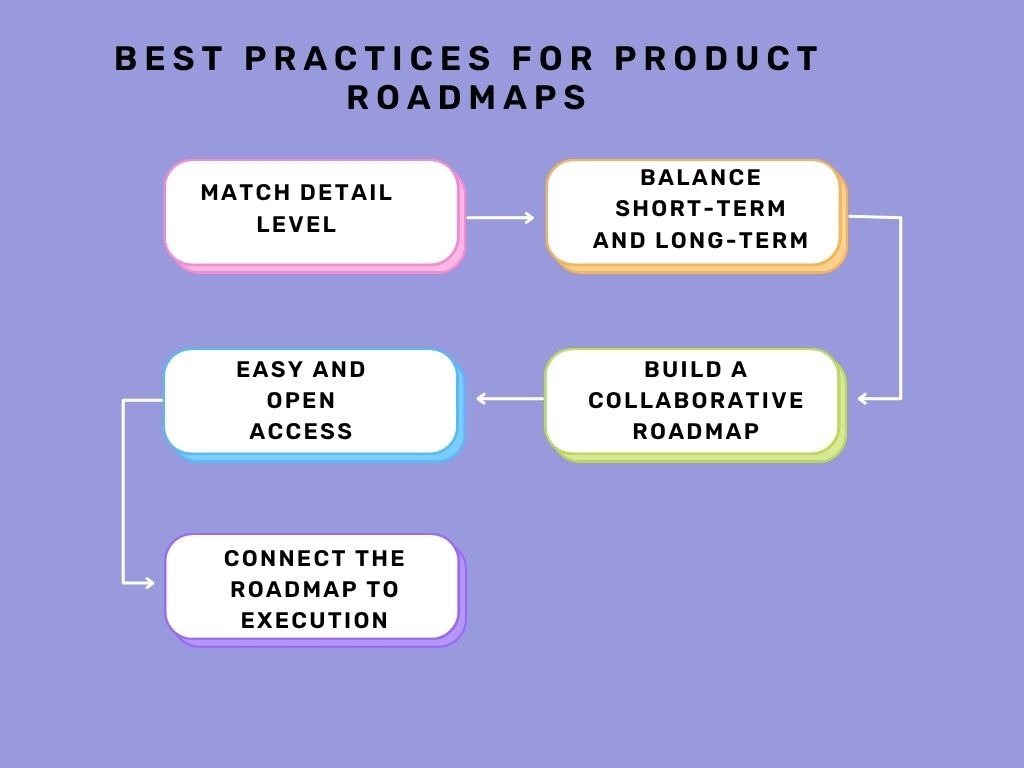
Only include as much detail as your audience needs. A roadmap loaded with technical subtasks is intimidating to a sales team. Calibrate the level of detail to who is reading it.
Keep the roadmap evenly balanced between short-term tactics and long-term goals for the product. Too much near-term focus makes the roadmap feel like a sprint plan, and making it long-term feels like a vision statement. The tension between the two is where the real strategic work happens.
Make it a collaborative roadmap, not a top-down document. Product management works best when the people closest to the customer and the code have a voice in what gets built.
You need to ensure everyone has access to the roadmap and knows to consult it first. A roadmap that requires a meeting to understand has failed at its job. The best product roadmap software changelog makes the document self-serve, so that any stakeholder can get the context they need without scheduling time on your calendar.
You also need to link your roadmap directly to execution. Map each initiative to an epic, user stories, and sprints. This hierarchy ensures that the roadmap creates alignment, not just a shared feeling of direction.
A product roadmap is only as strong as the process and tools behind it. If you are stitching together feedback from emails and priorities from a spreadsheet, something important will always fall through the cracks.
Productlogz brings everything together in one place. It can collect and prioritize customer feedback, manage your product backlog, and publish a live roadmap your team and stakeholders can actually trust.
Start your free trial on Productlogz today and turn your product strategy into a roadmap your whole organization can build around.
What is the difference between a product roadmap and a project plan?
A product roadmap outlines the strategic direction and high-level timeline of a product. A project plan covers the specific tasks, resources, and timelines needed to deliver part of that roadmap.
How often should a product roadmap be updated?
There is no universal rule, but most product teams update their roadmap every two to four weeks. The right cadence is the one that keeps the roadmap accurate enough that stakeholders consult it rather than email you for updates.
What should be included in a product roadmap?
A roadmap should include your product vision and objectives, specific features or deliverables, and status indicators that show the progress of feature development.
What is a now-next-later roadmap?
A now-next-later roadmap organizes initiatives into three buckets based on sequencing rather than specific dates. "Now" is what is actively being built. "Next" is what is coming up soon. "Later" captures longer-term direction.
What is the difference between a product roadmap and a backlog?
A roadmap is a strategic, high-level view of where the product is heading and why. A backlog is an operational list of specific tasks, bugs, and features ready to be worked on.
No sales calls. No long setup. Create your workspace and start collecting feedback today.
