

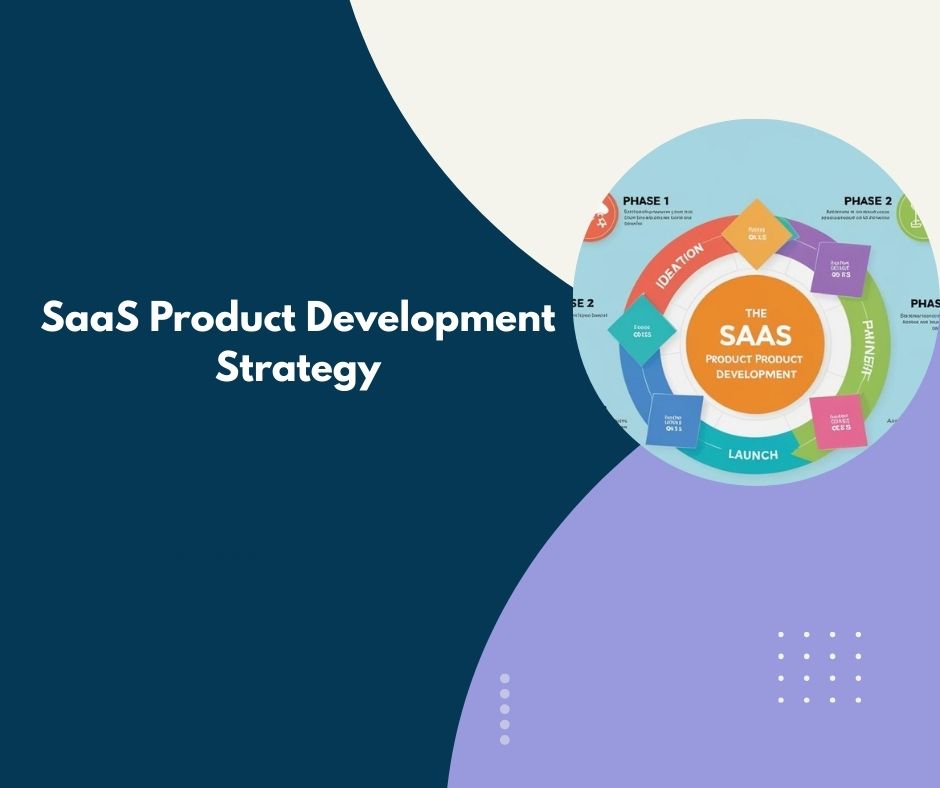
SaaS has become one of the most popular business models. According to Statista, the global SaaS market is expected to reach $299 billion before 2026 runs out. But building a successful SaaS product isn’t just about writing code or launching fast, it requires a strong SaaS product development strategy.
In this guide, we’ll break down what makes a successful SaaS product, how to create an effective strategy, and what steps to follow throughout the development process.
A SaaS product development strategy is the roadmap that guides a team from a product idea to a successful SaaS product. In a SaaS business, you’re delivering software over the internet, so your strategy must account for continual updates, feedback from customers, and product analytics.
At its core, this strategy answers the following questions:
Because software development for SaaS often uses agile product development, your plan should also define sprint cycles, milestones, and when to release a minimum viable product (MVP). This will ensure that your teams, from product managers to sales and marketing, share a clear direction for business growth and product growth.
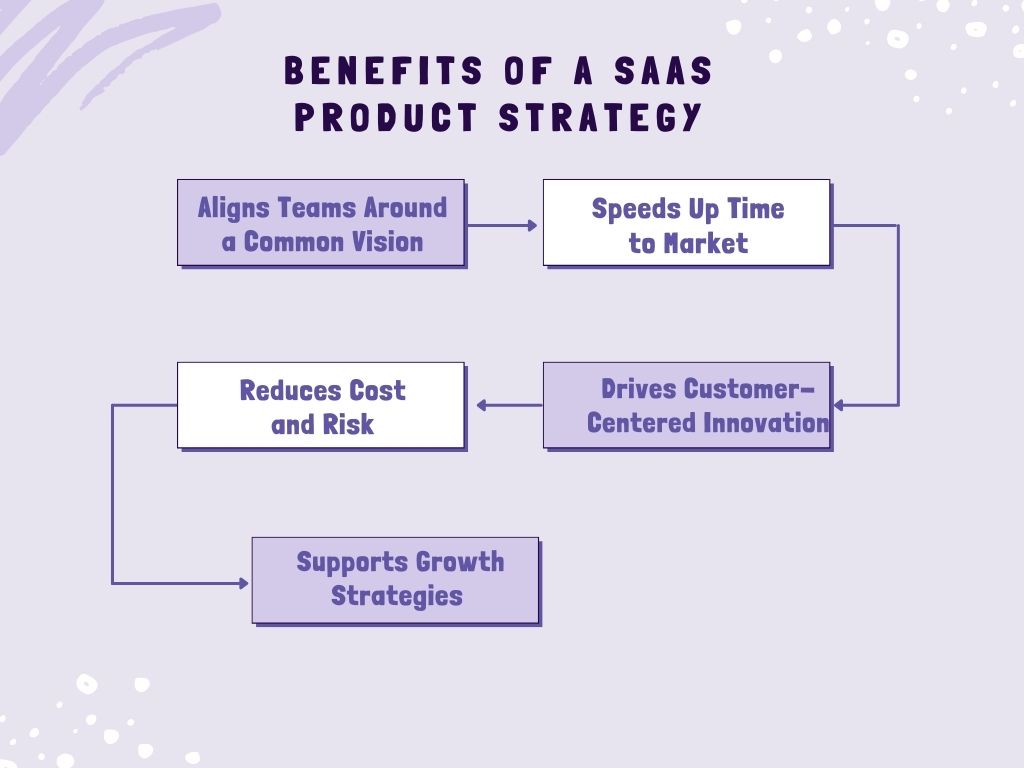
There are several reasons why product teams need a development strategy for their Saas product. Some of them include:
A robust SaaS product strategy ensures everyone understands the product vision and goals for your product. When product strategy helps clarify why you’re building a specific product type, it keeps your product teams focused on delivering value rather than chasing every new idea.
A clear product development strategy lays out your roadmap and product roadmap, so you can create a product and use your product in the market as quickly as possible. When you define a minimum viable product, you avoid “feature creep” and get essential functionality into users’ hands fast.
Knowing the cost of SaaS, including hosting, support, and updates, lets you plan budgets and resources. A solid strategy shows when to outsource development or design work, when to hire, and how to balance investment in new features with ongoing maintenance.
With built-in feedback loops, you can validate your product at each stage. This directs you to refine or differentiate your product, ensuring it resonates and delivers the clear value of your product.
Whether you’re targeting B2B SaaS customers or developing a self-serve SaaS platform, a comprehensive plan lays out growth strategies. You’ll need to come up with freemium models, upselling marketing strategies, and referral programs that fuel business growth and product adoption.
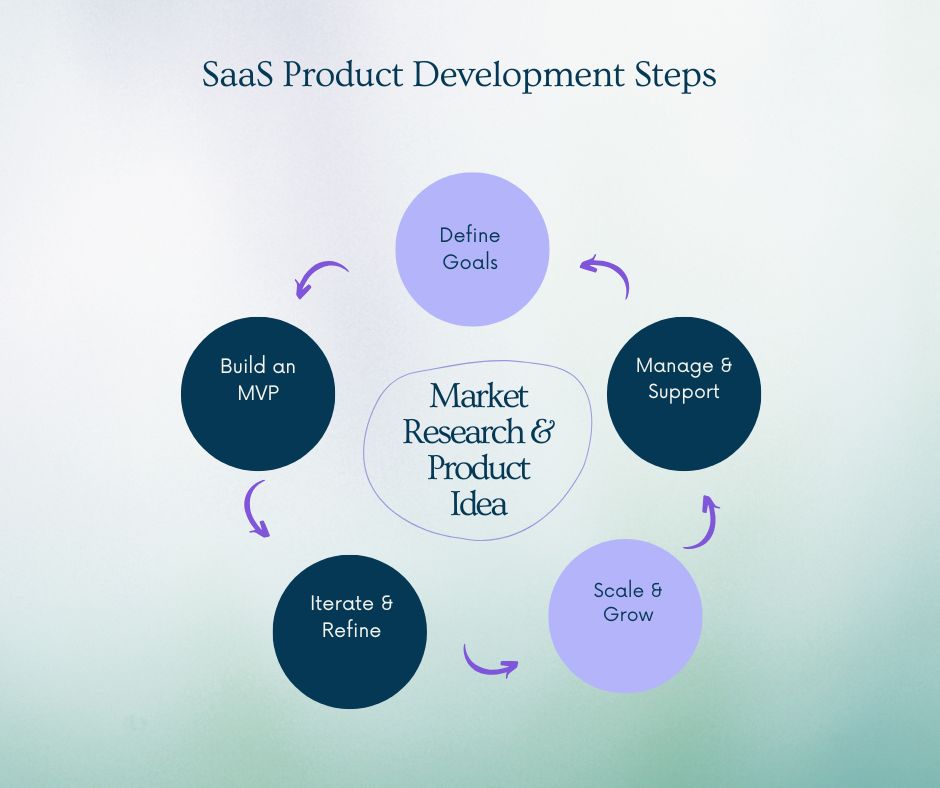
Every successful SaaS development process starts with a plan, and that plan includes some steps. They are:
You need to take a good look at the SaaS landscape by understanding its size, current trends, and the big names already dominating it. But more importantly, look for what's missing. What do customers complain about? Where do existing products fall short? That’s where your chance to shine lies. Once you've found that gap, it's time to define your product positioning.
Here, you're setting the direction. What do you want your SaaS product to achieve? These should be clear product goals tied to metrics you can actually measure. You can set your product goals using OKR's. Once you’ve got those, you can brainstorm ideas on what features you need to meet your OKRs. You can also fetch your customer feature requests from your Productlogz request board. once you have those, you’ll need a product roadmap, a timeline showing when certain features or milestones should happen. In order to prioritize what should be build , you can use any of the Product Roadmap Prioritization frameworks.
You don’t need to build everything right away. Instead, choose a few core product features that best show the value of your product. This helps you launch as quickly as possible and start learning from real users. Meanwhile, using an agile product development approach is a smart move here. Once your MVP is ready, share it, let people use your product, and collect customer feedback with Productlogz on how well it works.
Now that you’ve got users and feedback, it’s time to check your product analytics to see what’s working and what’s not. Are people using the key features? Are they coming back? Based on that data, you can refine the design, fix what’s clunky, and make a user-friendly product.
This is where the business side kicks in. You can try out SaaS growth strategies like freemium plans, where people use a basic version for free and upgrade later, or tiered pricing, where customers choose the features that match their needs. Don’t forget about referrals. Happy users love to tell others.
Alongside this, invest in sales and marketing to bring in more users. Then, keep an eye on key business growth metrics like Monthly Recurring Revenue (MRR), churn rate, and Customer Lifetime Value (LTV).
As more people use your SaaS platform, keeping it safe and reliable is critical. That means investing in strong security and meeting any compliance requirements for your target markets. You'll also need a support system that can help users when they get stuck. It will help you boost product adoption and satisfaction.
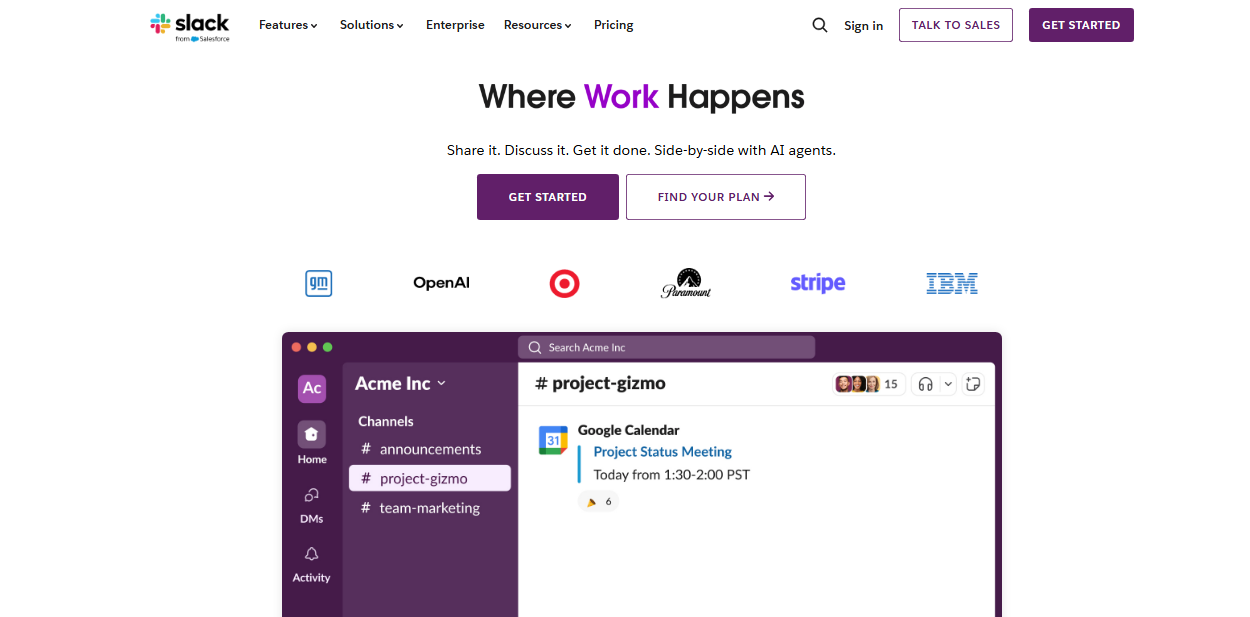
Slack’s journey from an in-house tool at Tiny Speck to a global collaboration platform offers a good example of a SaaS product development strategy in action. Around 2012, Stewart Butterfield and his team created a simple chat app to help their own developers coordinate on a game project. Once they saw how much that lean tool improved their workflow, they validated their product by sharing an early prototype with a handful of friendly companies. By August 2013, Slack had opened a “preview release” to about ten organizations.
Today, Slack has built a successful product as it connects with over 2,600 third-party apps like Google Drive, Zoom, Salesforce,and others. Infact, by the end of 2024, Slack reported an estimated 38.8 million daily active users, up from 32.3 million the year before. This is a clear evidence that their growth strategies paid off.
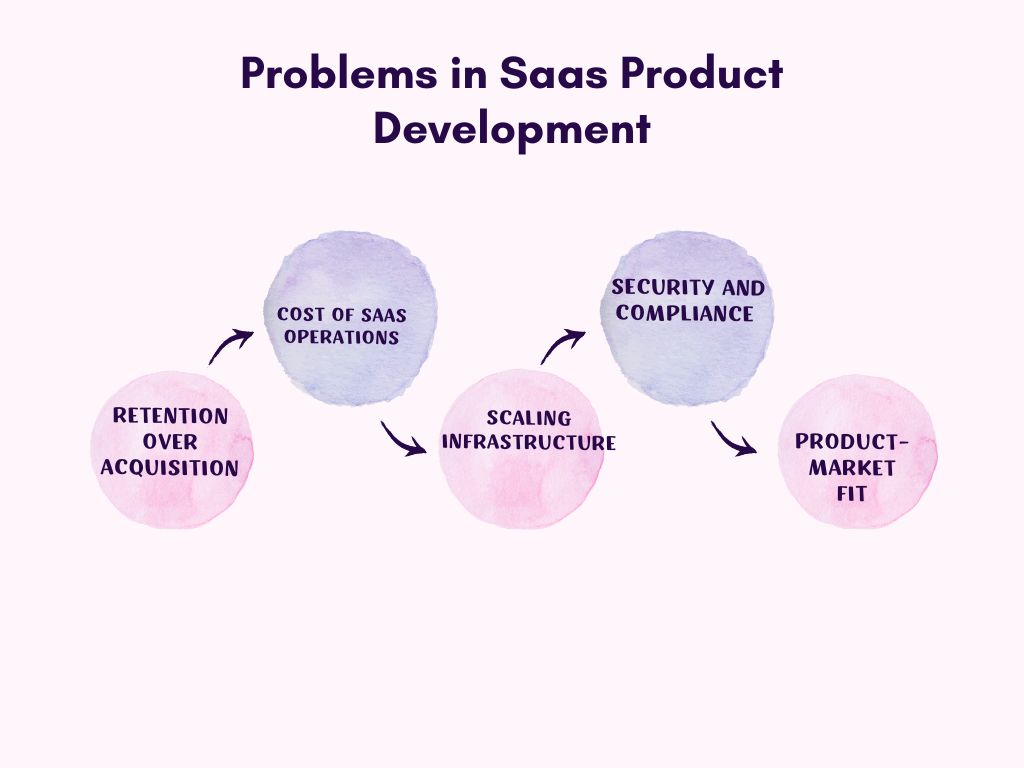
Even with careful planning, challenges in SaaS can arise. They include:
It’s often more expensive to win new customers than to keep existing ones. You must continually optimize your product design and use customer feedback to address pain points.
Ongoing hosting, support, and compliance costs can climb quickly. That's why monitoring the cost of SaaS and implementing efficient resource usage is very important.
As you grow, you need to scale servers and databases without service interruptions. A good development process anticipates scaling needs.
Protecting user data and meeting regulations (e.g., GDPR, HIPAA) is non-negotiable. This demands dedicated engineering and auditing resources.
Finding the sweet spot where your product brings unique value requires constant testing of features, pricing, and positioning. Without product-market fit, even the best product strategy built with Saas applications can stall.
Creating a SaaS product development strategy is one thing; however, making it effective is another. Here are some tips to help you out:
A clear product vision is the foundation of a robust product. It aligns teams and informs the product roadmap.
Early customer feedback on your MVP guides product growth and minimizes wasted effort.
Track key metrics like activation rate, churn, and feature usage. Product analytics data helps you refine your product and differentiate your product as the market evolves.
Use cloud services that let you scale up or down. Embed security practices from day one to protect your reputation and data.
The SaaS industry evolves quickly. Schedule periodic reviews of your product strategy framework to adapt to market shifts, emerging technologies, and competitive moves.
If you're looking to develop a SaaS product that truly works and stands out, you can't just wing it. You need a clear, well-thought-out strategy. That means knowing your users inside and out, taking the time to validate your product idea, and designing a smooth and enjoyable experience.
So, don’t just build a product, but plan, test, refine, and grow. With the right SaaS product development strategy and tools like Productlogz by your side, you're setting yourself up for a successful SaaS journey from day one.
No sales calls. No long setup. Create your workspace and start collecting feedback today.
