


You’ve spent weeks building your product, and traffic is finally coming in. But visitors are leaving without converting.
That’s exactly the problem Hotjar was built to solve. It helps you understand user behavior using heatmaps, session recordings, surveys, and feedback tools.
But in 2026, the real question is: Is Hotjar pricing actually worth it? Or are teams overpaying for what they get?
In this guide, we break down Hotjar pricing in detail, what each plan costs, where the hidden costs appear, and whether it’s still worth it compared to alternatives.
Updated July 2026: Hotjar fully merged into Contentsquare on July 1, 2025, and its pricing page now redirects permanently to Contentsquare's own pricing. The old Observe, Ask, and Engage products and plan names (Basic, Plus, Business, Scale) have been replaced by a new structure: Free, Growth, Pro, and Enterprise.
Before we look at specific numbers, it's important to understand Hotjar's pricing structure. Most people assume Hotjar is a single product with one price. It's not.
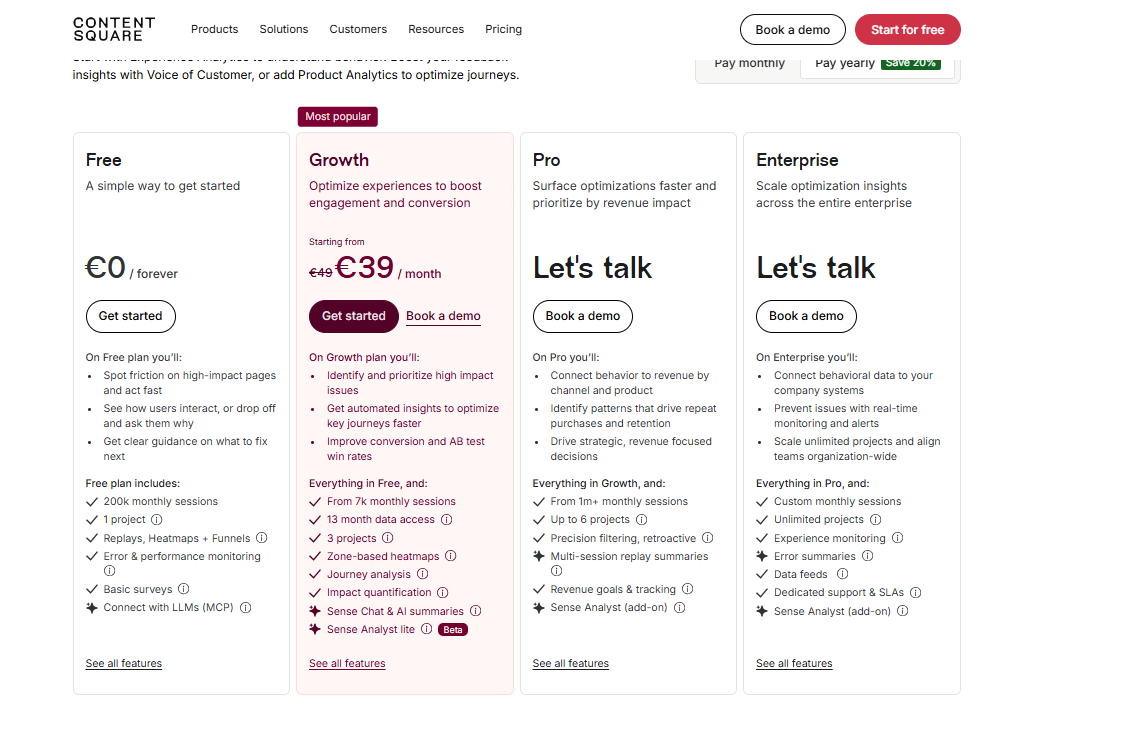
Hotjar now uses a product based pricing model. Instead of paying for three separate products, you choose from three product lines(Experience Analytics, Voice of Customer, and Product Analytics). Each product has four tiers:
You can subscribe to one product or combine multiple products based on your needs. For example, you might choose the Growth plan for Experience Analytics and the Free plan for Voice of Customer. As your team grows or you add more products, your monthly costs can increase. That's why it's important to understand what each product includes before choosing a plan. Now, let's look at what each product actually costs:
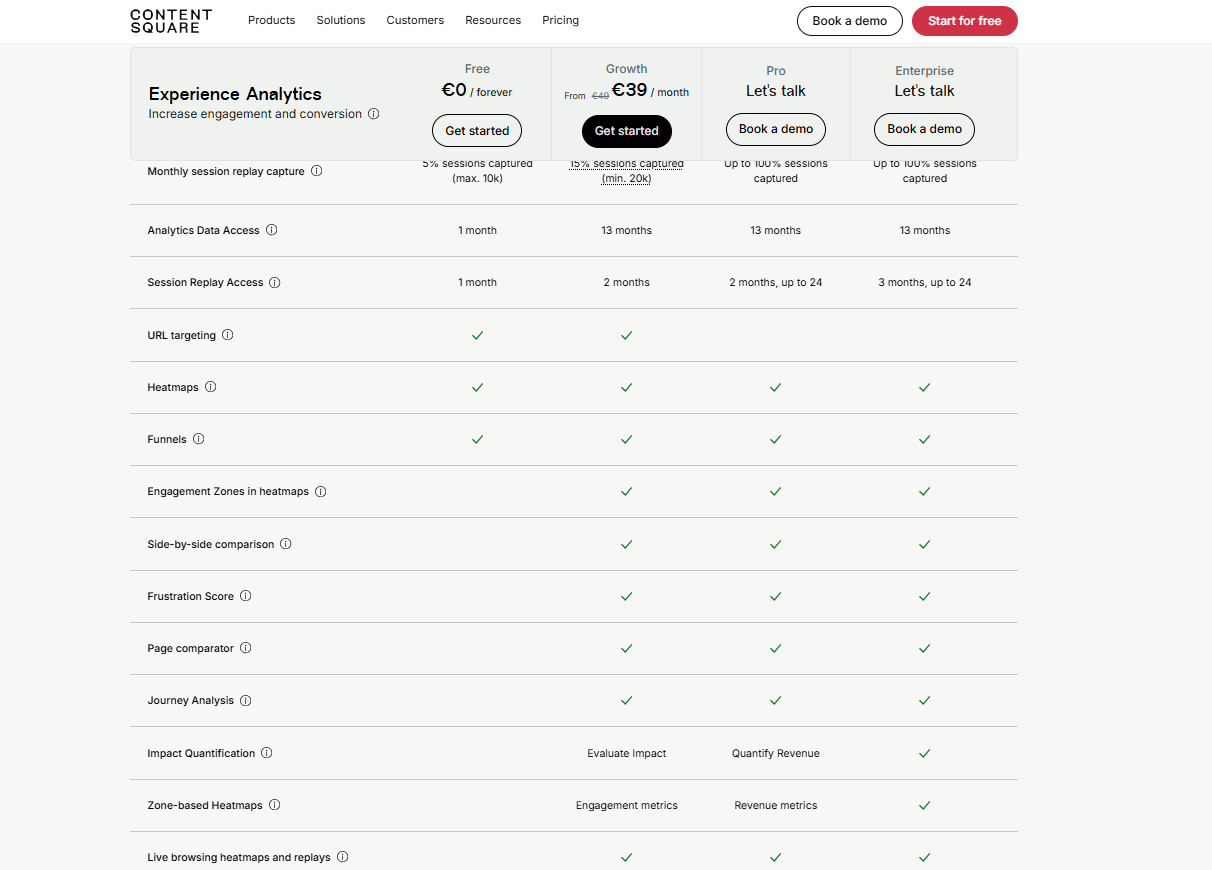
Free Plan (€0): The Free plan is one of the biggest improvements in Hotjar's pricing. It includes up to 200,000 monthly sessions, along with heatmaps, session replays, funnels, and error monitoring. For many small websites, this is more than enough to get started without paying.
Growth Plan (€39/month): The Growth plan starts at €39 per month when billed annually. It adds three projects, 13 months of data history, journey analysis, zone based heatmaps, and AI powered summaries. It is a good choice for growing teams that need deeper insights into user behavior.
Pro Plan (Custom Pricing): The Pro plan is designed for businesses with high traffic. It starts at 1 million monthly sessions and includes advanced filtering, multi session replay summaries, revenue tracking, and support for up to six projects. You'll need to contact the sales team for pricing.
Enterprise Plan (Custom Pricing): The Enterprise plan supports custom session volumes and unlimited projects. It also includes advanced experience monitoring, error summaries, data feeds, dedicated support, and service level agreements. Pricing is available only after speaking with the sales team.
One major change is that Pro and Enterprise no longer have public pricing. Unlike the old Scale plan, which started at a fixed monthly price, you'll need to book a sales call to get a custom quote for either plan.
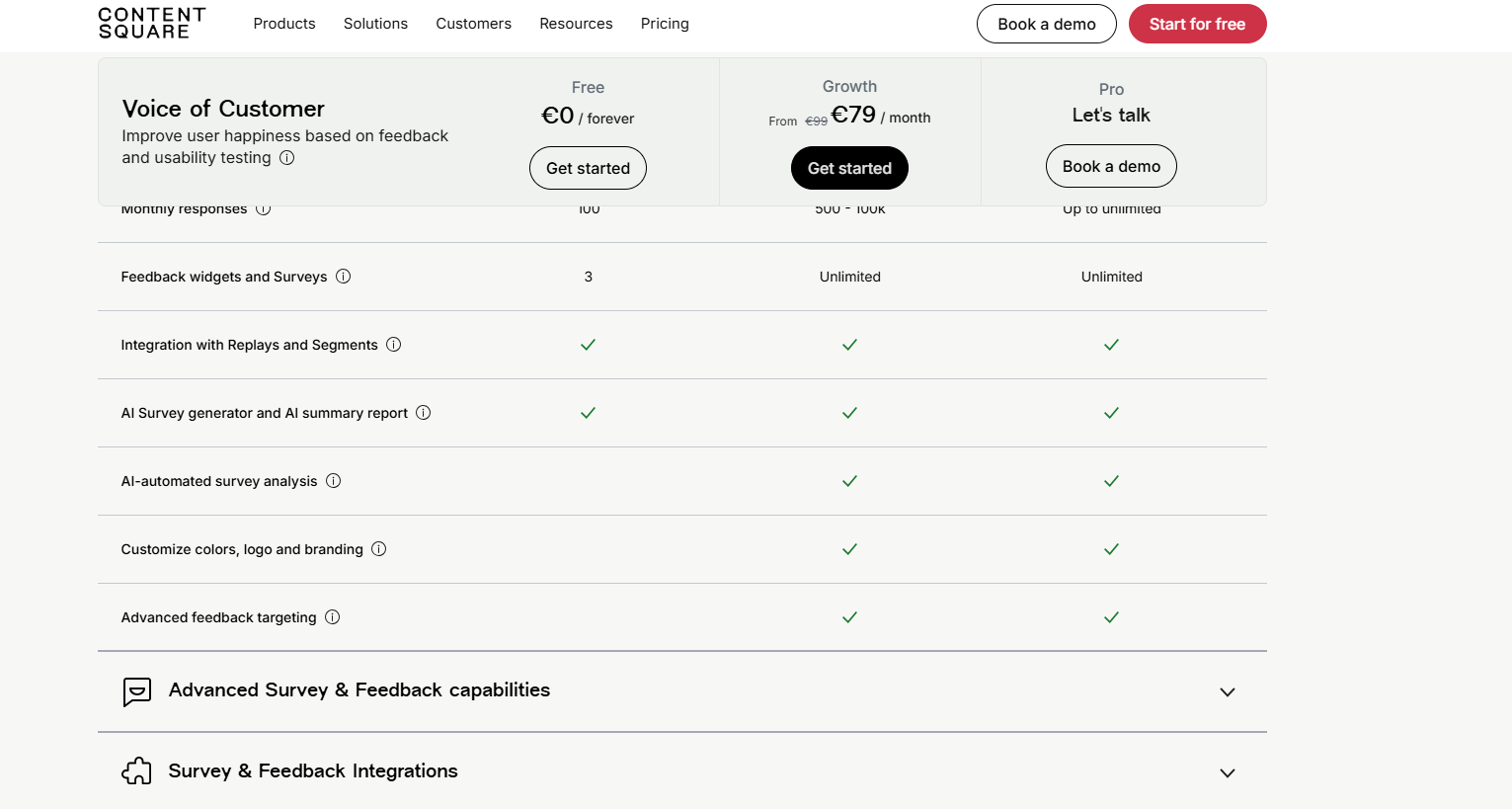
Free Plan (€0): The Free plan includes 100 survey responses per month along with three feedback widgets and surveys. It's a good starting point for small websites that want to collect basic customer feedback.
Growth Plan (€79/month): The Growth plan starts at €79 per month when billed annually. It increases your response limit from 500 to 100,000 responses per month and unlocks unlimited surveys and feedback widgets. You also get AI powered survey creation, automated summaries, AI driven survey analysis, custom branding, and integration with session replays and user segments.
Pro Plan (Custom Pricing): The Pro plan removes response limits and adds advanced feedback targeting, more powerful survey capabilities, and deeper integrations. Pricing is not publicly available, so you'll need to contact the sales team for a quote.
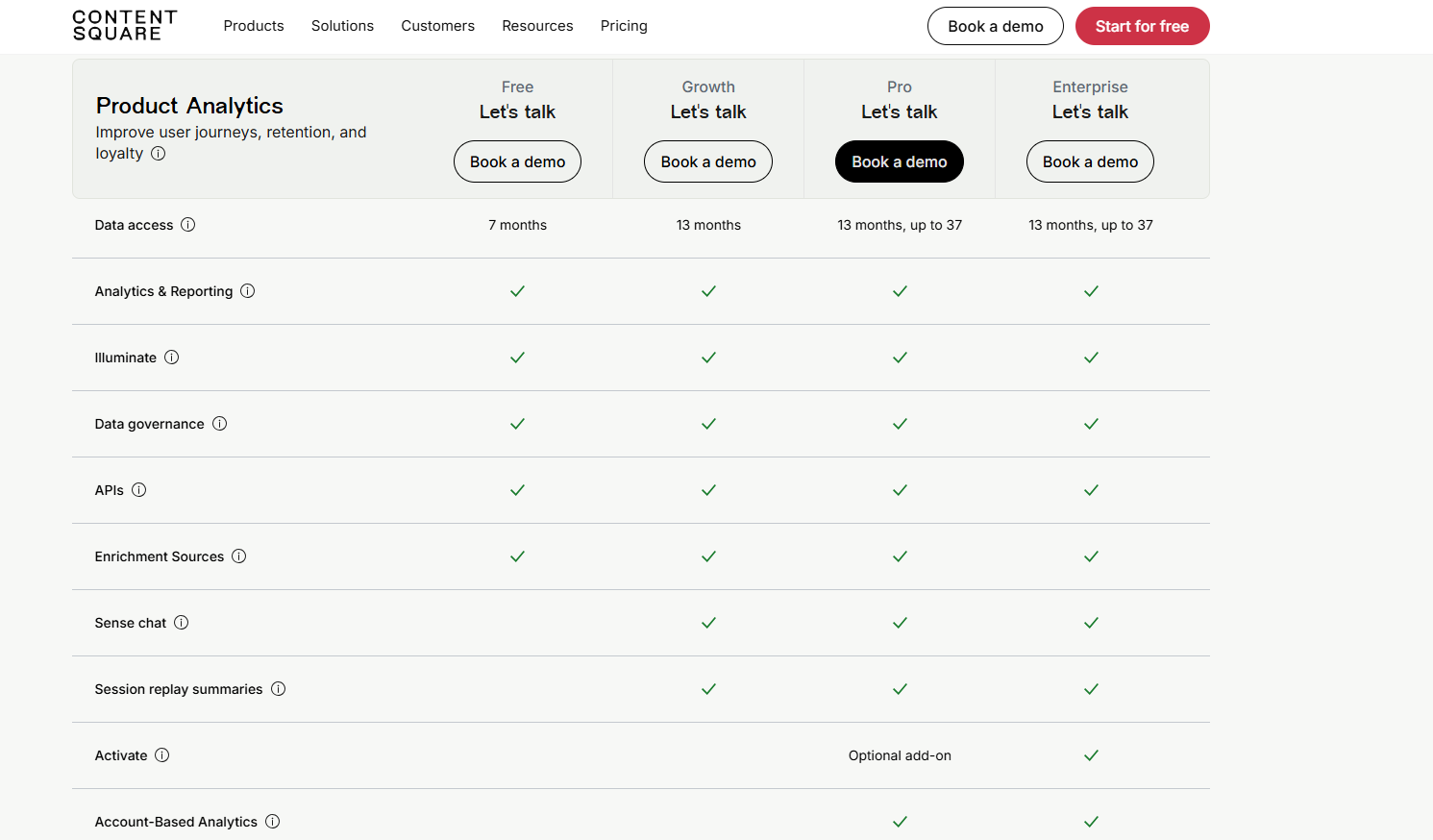
Unlike the other two products, Product Analytics does not offer a self service signup. Every plan, including the Free plan, requires you to book a demo with the sales team. Hotjar also does not publish pricing for any of these plans.
Free Plan: The Free plan supports up to 10,000 monthly sessions and includes 7 months of data retention.
Growth Plan: The Growth plan supports 17,000 to 80,000 monthly sessions and increases your data retention to 37 months. Pricing is available only through the sales team.
Pro Plan: The Pro plan is designed for businesses with higher traffic, supporting 33,000 to 8 million monthly sessions. Like the other paid plans, you'll need to contact sales for a custom quote.
Enterprise Plan: The Enterprise plan is built for large organizations with 1 million or more monthly sessions. It includes the highest usage limits and custom pricing based on your business requirements.
It seems Product Analytics is clearly aimed at businesses that need to analyze large amounts of user data. If you're only looking for heatmaps or surveys, you probably won't need this product. However, teams that want deeper product insights may find the additional capabilities worth exploring.
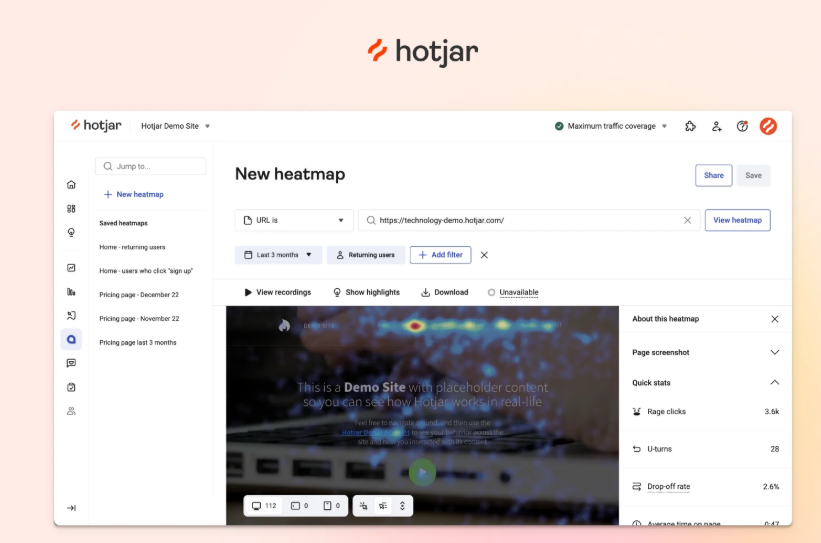
This is where many teams get surprised. Here's a breakdown of costs that aren't obvious from the pricing page:
Hotjar no longer lists prices for its Pro and Enterprise plans. Once you outgrow the Growth plan, you'll need to contact the sales team for a quote. This makes it difficult to estimate your future costs as your business grows.
The generous Free plan for Experience Analytics is appealing, but it only covers analytics features. If you also need surveys or product analytics, you'll need to subscribe to Voice of Customer or Product Analytics separately. These costs can add up faster than many teams expect.
Some of Hotjar's most valuable features are only available on higher plans. Precision filtering, multi session replay summaries, revenue tracking, and advanced feedback targeting all require a Pro plan. Since Pro pricing isn't public, you won't know the actual cost until you speak with the sales team.
Free and lower tier plans keep your data for a limited time. If you need to compare user behavior over longer periods or review older insights, you may need to upgrade to a higher plan. This is an extra cost that many businesses don't consider when choosing a plan.
As your traffic grows, you'll likely need higher usage limits or additional product subscriptions. While the entry level plans are affordable, the total cost can rise quickly as your business expands and your analytics needs become more advanced.
Here's what you'd pay if you subscribed to Hotjar's two main products using their entry level paid plans:
That's €118 per month before any discounts or custom pricing. If you also need Product Analytics, you'll need to contact the sales team for a quote because no public pricing is available. This makes it difficult to estimate the true cost of using the full Hotjar platform, especially as your team grows or needs more advanced features.
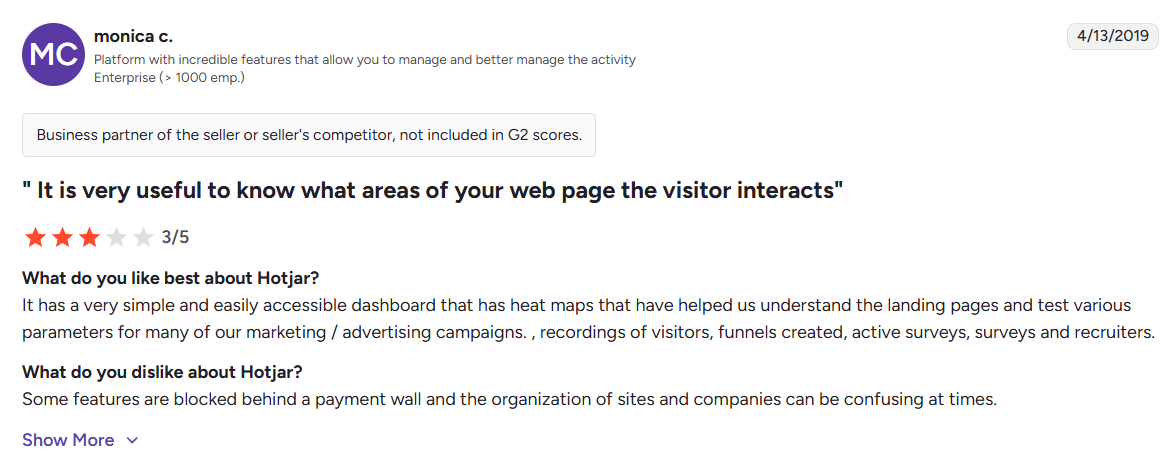
Hotjar has a strong reputation, but pricing frustrations are a consistent theme across G2 and Capterra reviews. Here's what real customers are saying:
"The price is too high, and the support is not very good either." — G2 Reviewer
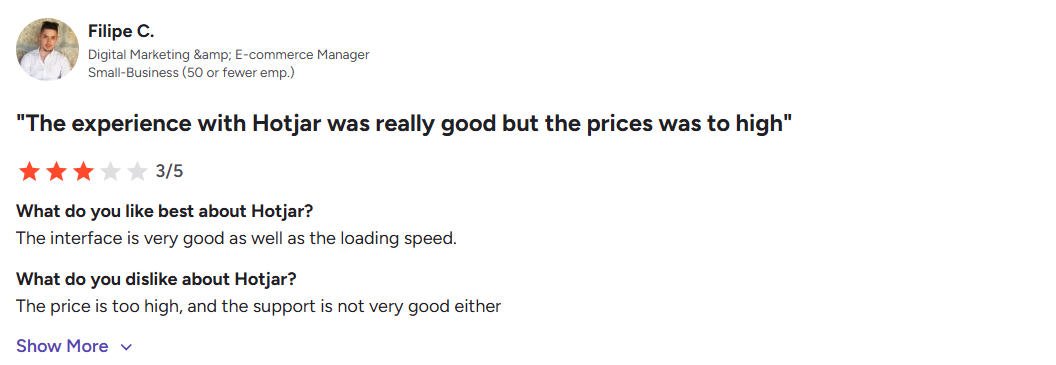
"Some features are blocked behind a payment wall, and the organization of sites and companies can be confusing at times." — G2 Reviewer
"It doesn't make sense to pay for it long term. Should be used as a check-in tool." — G2 Reviewer
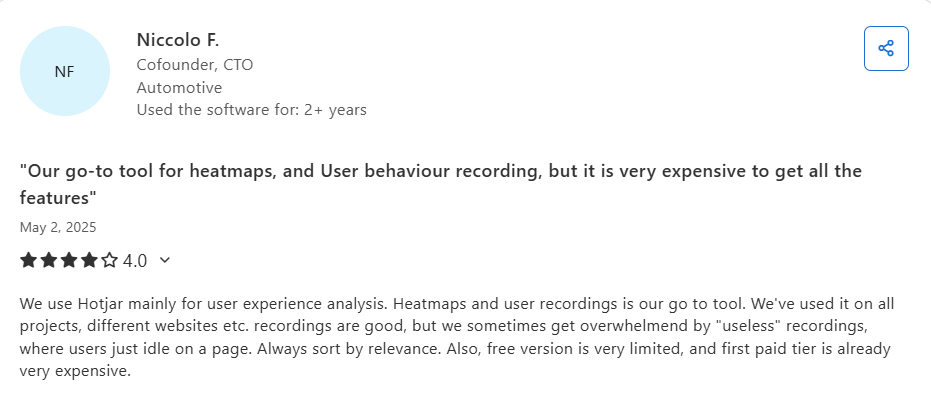
The pattern across reviews is pretty clear. Users find Hotjar valuable for what it does, but the modular pricing model, combined with restrictive plan caps, creates frustration for teams that grow beyond the Plus tier.
Hotjar is worth it if you mainly need heatmaps, session recordings, and basic user behavior insights. The new Free plan for Experience Analytics includes up to 200,000 monthly sessions, making it a great option for small websites and startups.
On the other hand, Hotjar may not be the best choice if you need multiple products, such as analytics, surveys, and product analytics. Since each product has its own pricing, your monthly costs can increase quickly. And if you outgrow the Growth plans, you'll need to contact the sales team because Pro and Enterprise pricing is no longer public.
The core issue isn't that Hotjar is a bad product. In fact, its Free plan is more generous than ever. The challenge is that pricing becomes much less transparent as your needs grow. Once you start combining products or upgrading to higher tiers, it becomes difficult to estimate your long term costs before speaking with sales.
Use Hotjar if you:
Do NOT use Hotjar if you:
Yes, there are other feedback tools similar to Hotjar. And one option worth looking at is ProductLogz. ProductLogz is a feedback management, surveys, roadmap, and changelog tool built specifically for product teams.
While Hotjar focuses mainly on behavior tracking like heatmaps and session recordings, many teams quickly realize they need more than just data on what users do.
They need a simple way to collect feedback, decide what to build next, and keep users updated. That’s where ProductLogz stands out, and it does it really well, at a fraction of Hotjar's price.
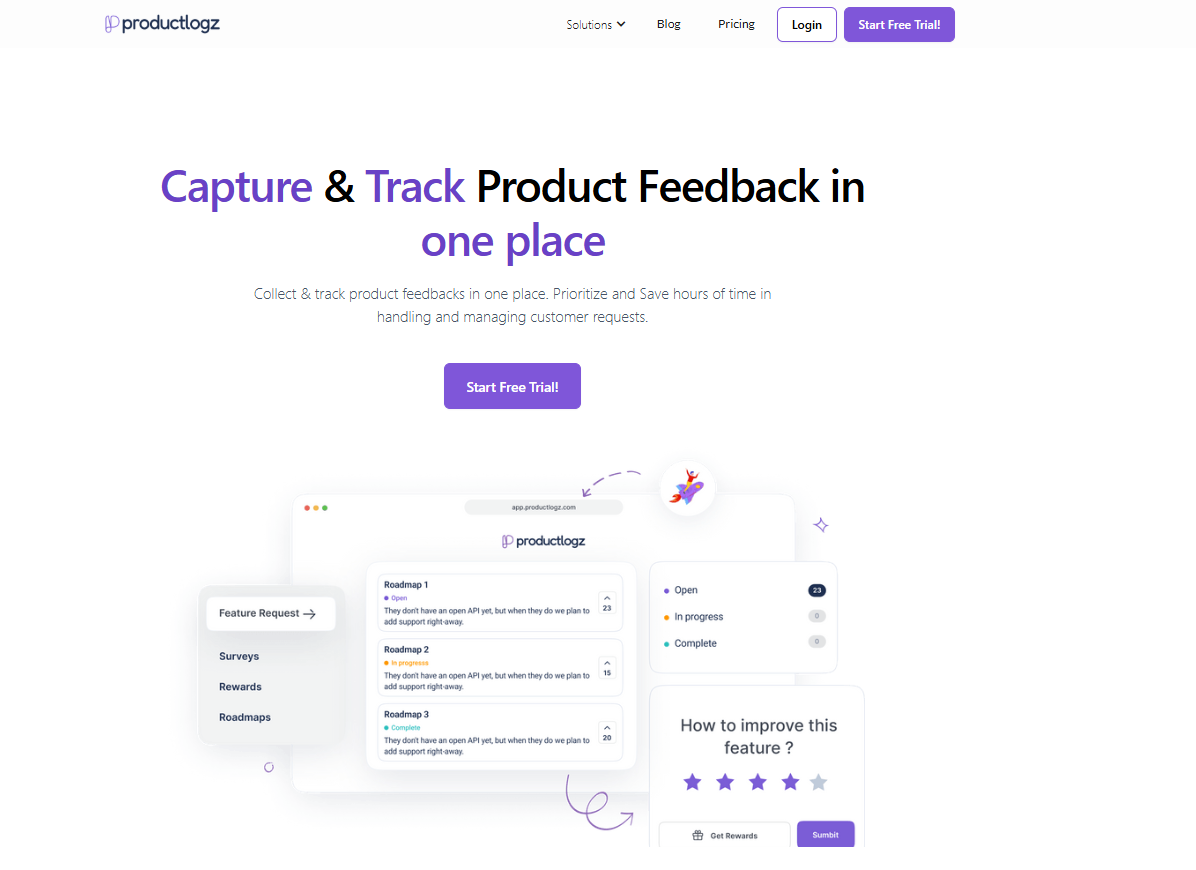
Productlogz is designed to:
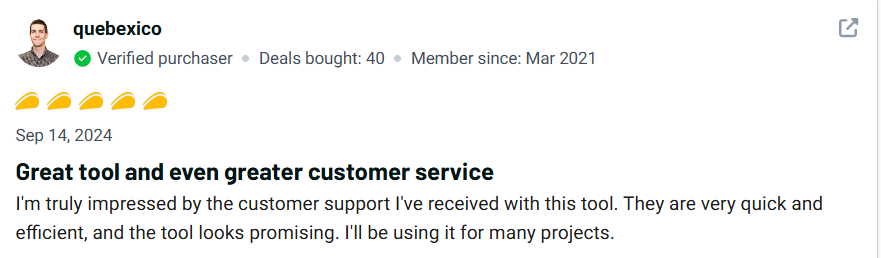
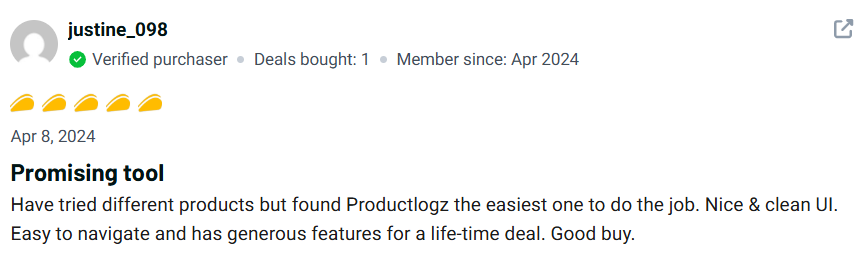
ProductLogz is rated 4.5 out of 5 stars on AskSumo from verified buyers. You can check out the user reviews below:
I'm truly impressed by the customer support I've received with this tool. They are very quick and efficient, and the tool looks promising. I'll be using it for many projects." — AppSumo Verified Buyer
"Have tried different products but found Productlogz the easiest one to do the job. Nice & clean UI. Easy to navigate and has generous features for a life-time deal. Good buy." — AppSumo Verified Buyer
The pricing structure of Productlogz is quite transparent. It has basically two tiers of paid plans:
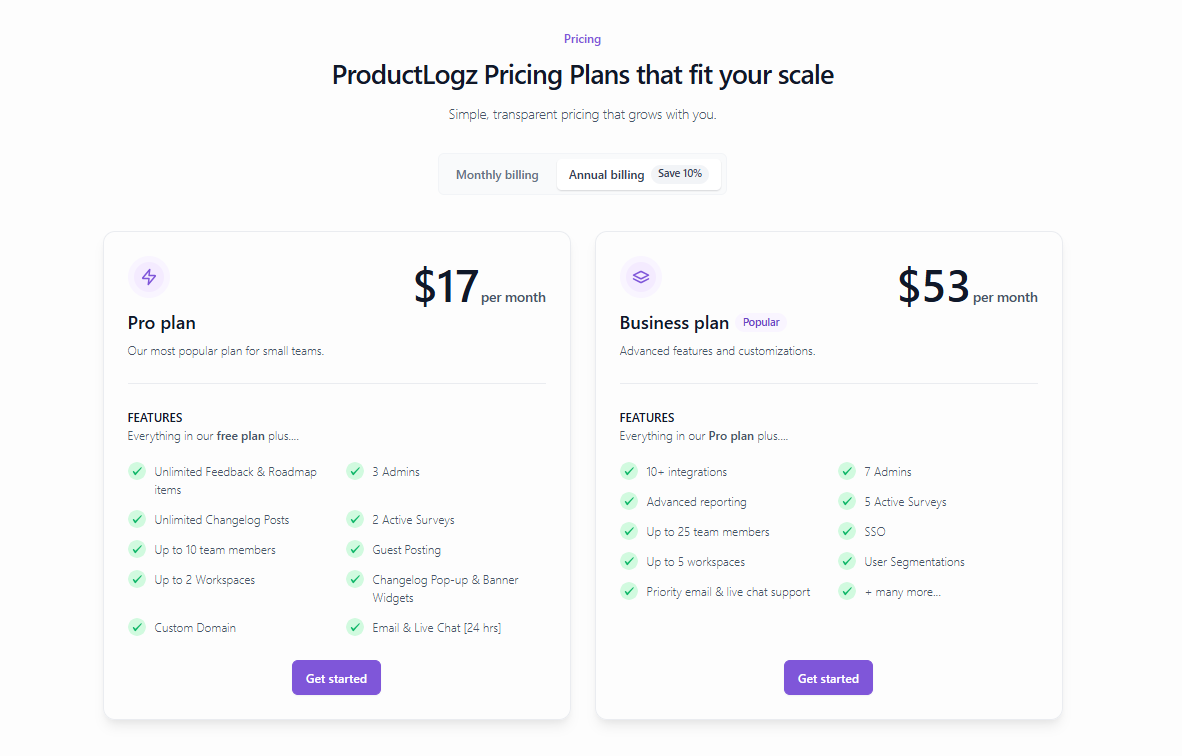
Perfect for solo founders and small teams. Here's what you get:
Built for growing teams that need more power. Everything in Pro, plus:
Both plans include a 60-day money-back guarantee, something Hotjar doesn't offer.
Hotjar is genuinely powerful for what it does. If your team's primary need is understanding how users behave on your website, it delivers real value. But the pricing structure punishes growth, restricts critical features, and offers no tools for the product planning work.
However, if behavior tracking is your core need and you can justify the Business plan or above, Hotjar is worth evaluating. That said, if you're looking for broader feedback and a product management platform, ProductLogz gives you more of what matters, at a price that doesn't require a budget meeting.
Ready to get started? Sign up for ProductLogz today and start turning user feedback into better product decisions.
Is Hotjar free to use?
Yes. Hotjar's Experience Analytics plan is free forever and covers 200,000 sessions a month. Voice of Customer also has a free tier, covering 100 survey responses a month.
How much does Hotjar cost?
Hotjar offers free plans for its products, while paid plans start at €39/month for Experience Analytics and €79/month for Voice of Customer when billed annually. Higher tier plans, including Pro and Enterprise, use custom pricing and require you to contact the sales team for a quote.
What is Hotjar used for?
Hotjar helps you understand how people use your website. It shows where users click, how they navigate your pages, and lets you collect feedback so you can improve your website and user experience.
What is better than Hotjar?
The best Hotjar alternative depends on what you need. Popular options include Productlogz, Microsoft Clarity, FullStory, and PostHog.
What are the limitations of Hotjar?
Hotjar works only on websites. It cannot track user behavior inside native mobile apps. If you have an app, you would need a different tool like UXCam or LogRocket.
No sales calls. No long setup. Create your workspace and start collecting feedback today.
